
It was my third or fourth clinical experience in Missouri State University’s Doctorate of Physical Therapy program. The location was an Apex outpatient clinic in Monett, MO. My clinical instructor was laid back and practical. One of the most memorable things he taught me was to troubleshoot a person’s physical dysfunction in an oversimplified three-phase process: pain, motion, strength.
(1) Pain: the signal.

While pain can be noise (i.e. distraction), my experience suggests it is almost always a signal (i.e. clue) that can help lead you to the source of your problem. Pain may mislead. Pain might be referred from one part of the body (e.g. low back) to another part (e.g. leg) or it may be the result of an object (e.g. books, desks, cars, computers, & cell phones) seeming unrelated to the painful area (e.g. head, neck, shoulders). But even these or more mysterious (e.g. psychological) and malicious (e.g. cancer) causes of pain are still your body trying to tell you that something is wrong.
So, pain often serves as your first definitive signal that something is wrong. There may be many more signs, symptoms, and signals occurring before the pain, but you rarely notice what you are not looking for. Pain is often your first notable complaint and the first thing you want to get rid of.
For these reasons, pain is often the first problem to address and the first thing to improve. Pain may increase with movement. So decreasing pain can help you move more.
(2) Motion: the solution.

Movement is the key to physical rehabilitation and often the second phase of one’s rehab journey. The more painful a joint is, the slower one moves. But when pain is tolerable, more movement is possible. And gentle, balanced movement often has the secondary effect of further decreasing pain.
Motion progresses in a predictable pattern. First, like a soldier being pulled off a battlefield or a bed-bound patient, someone moves for you. This is called passive range of motion (PROM). Then someone helps you move (Active-Assisted Range of Motion or AAROM). Lastly, you move yourself without help (Active Range of Motion or AROM).
One of my professors used to say, “Motion is lotion.” In fact, some joints like the knee rely on movement to push fluid in and out of the cartilage deep within joint space (see this article on the inner 2/3rds of the meniscus). So, movement increases blood flow to the area around and within the joint space. Keeping things moving helps keeps your body healthy.
And motion is the key to unlocking strength. That increased blood flow is necessary to fuel muscle contractions and movement. It also feeds and builds muscle, increasing strength.
(3) Strength: the resolution.

A joint that does not move does not get stronger. Movement through a full range of is necessary to strengthen a muscle across its entire length. You can move without strength but you cannot be strong without movement. So, movement is the key to muscle building, and strength is often the last piece of the physical rehabilitation puzzle.
Building full strength often requires little to no pain and near to full range of motion. Once you are moving through full, a pain-free range of motion (ROM) you can start strengthening across that range and move from active (AROM) to resisted range of motion (RROM). There are two phases of resisted range of motion: concentric and eccentric.
When a muscle shortens its length (i.e. concentric contraction) it is actually subjected to less force than when it lengthens (i.e. eccentric contraction). So, as long as you’re moving through the same range of motion against the same amount of resistance, your muscles (e.g. quadriceps, glutes) will be subjected to more force during the eccentric phase (e.g. down phase) of an exercise (e.g. squats) than the concentric phase (e.g. up phase) of the exercise. That means you can build more muscle and reduce the risk of injury if you attend to the eccentric, not only the concentric, phase of exercises.
Physio: an imperfect process.

Physio (i.e. physical) therapy can be described as a disorderly progression through three simple phases: (1) decreasing pain, (2) increasing motion, (3) gaining strength. But those three phases are not mutually exclusive. They are a continuum with significant overlap.
Pain, motion, and strength serve to guide you through the rehab process. They are general principles not exact protocols. Physical rehabilitation is not a step by step instruction manual. Physiotherapy is both art and science.
Conclusion: your move.
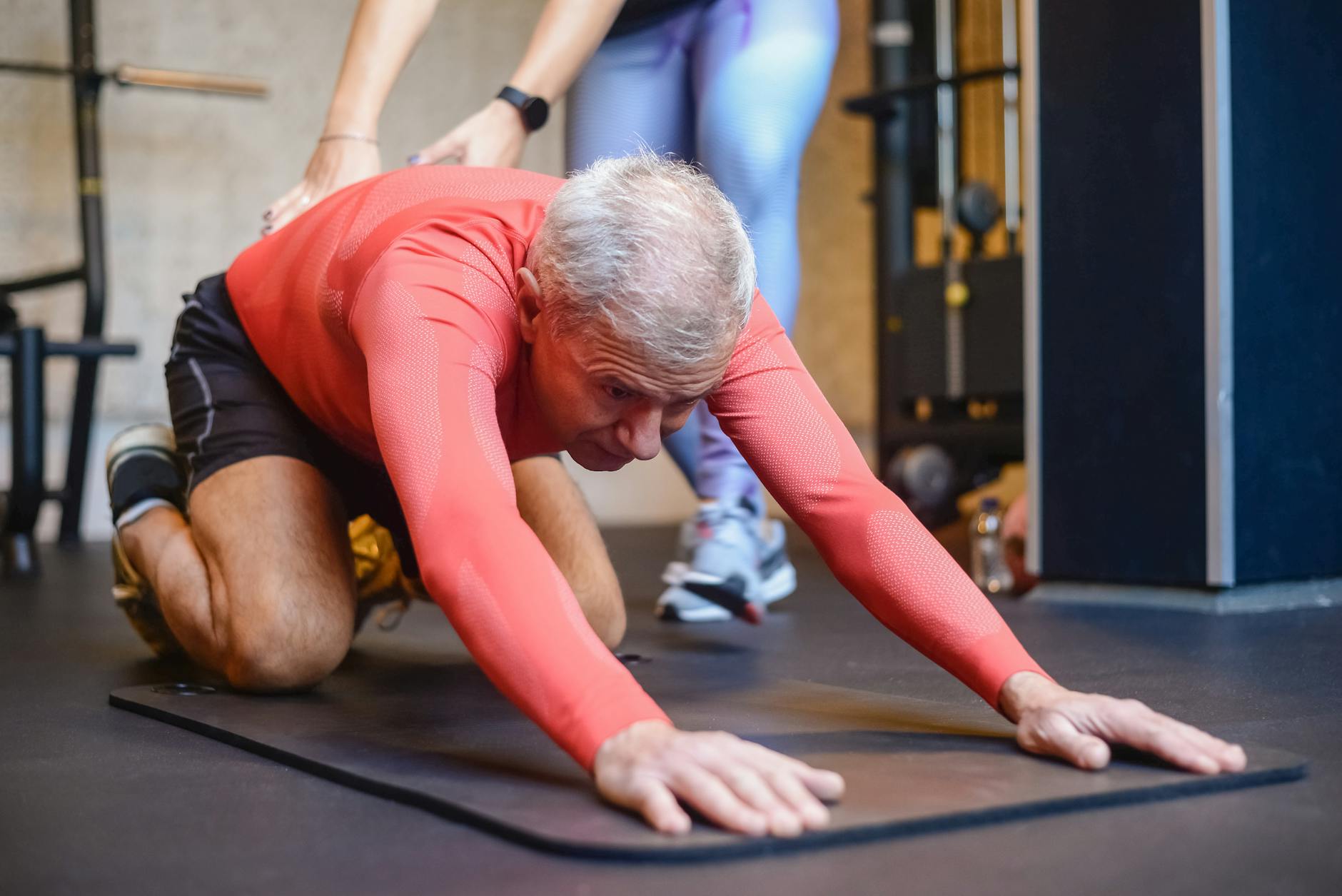
So that’s a short explanation of physical rehabilitation: (1) pain, (2) motion, (3) strength. Physical (i.e. physio) therapists can help you with the details. We can try to reduce your pain and even try to move for you. But in the end, most of the work is your responsibility.
You have to learn, move, and adapt. Reduce your pain, improve your motion, and increase your strength, in that order. Enjoy the journey.
 Protean Therapy
Leave a comment