Ebola: that terrible disease in a land far, far away where you want it to stay. But there’s more to Ebolavirus than that. And some of the reasons for its spread may concern you.

Why most of us don’t worry about Ebola:
Orthoebolavirus (i.e. Ebolavirus) is a class of pathogens that spreads through contact with the body fluids of an infected host. Ebola may have jumped from bat populations to humans in the 1970s. Four (Zaire, Sudan, Bundibugyo, & Taï Forest) of the six known strains of Ebolavirus infect humans.
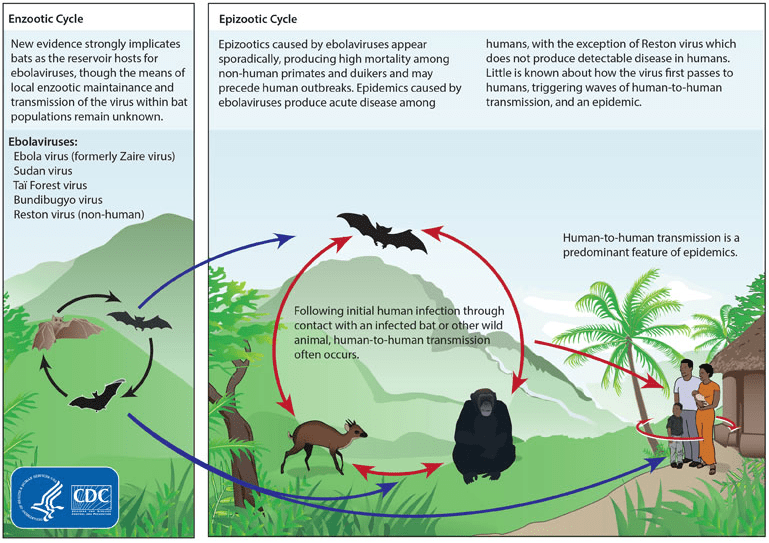
Source: https://www.cdc.gov/vhf/ebola/resources/virus-ecology.html
In May of 2026, Ebola Bundibugyo which is less deadly than Ebola Zaire crossed into Uganda from the conflict-ridden region of the Democratic Republic of Congo. But the only available Ebolavirus vaccine (rVSV-ZEBOV, Ervebo) protects against Ebola Zaire not Ebola Bundibugyo. On average, Ebolavirus kills about half of the people it infects. So, the probability of surviving Ebolavirus is similar to a coin flip…
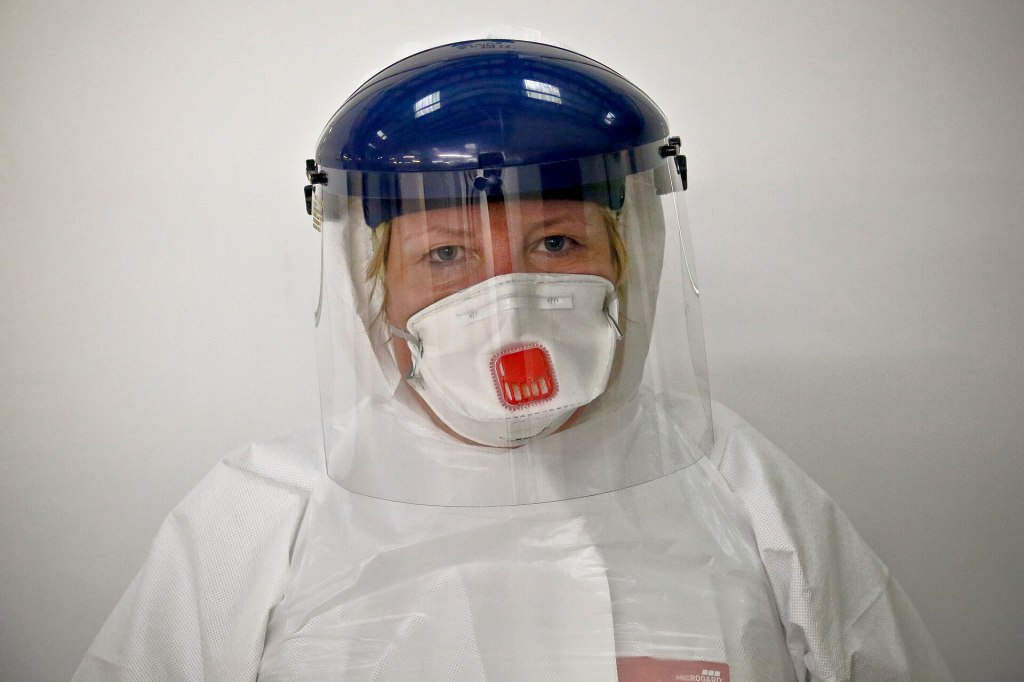
Although Ebola’s approximately 50% chance of death (i.e. mortality rate) is high, isolation, regular handwashing, and contact precautions are effective ways to slow its spread. A bare minimum of universal (e.g. handwashing before + after), contact (gowns + gloves), and droplet (mask + face shield) precautions are used around individuals being tested or treated. All parts of the body should be shielded from any potential contact with the infected host’s body fluids at all times, especially while donning/doffing personal protected equipment (PPE). And since Ebolavirus is endemic to Central Africa, screening travelers for symptoms of Ebola helps contain the virus within Africa.
Congo Conflict: What most don’t know…
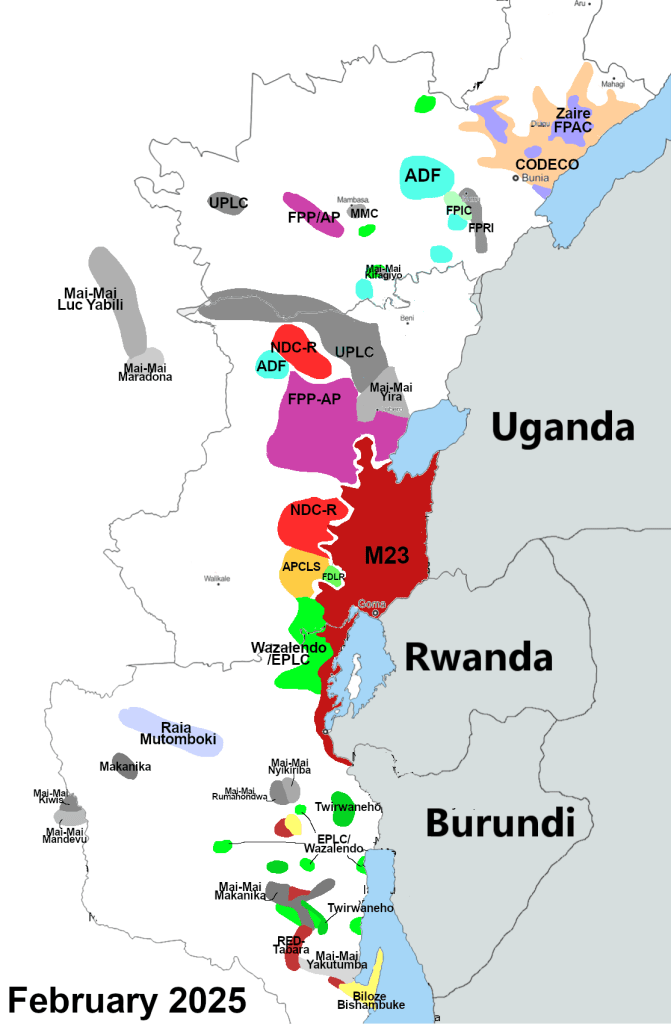
There is a long history of colonial violence and civil conflict in the Congo. The Center for Preventative Action & Panzi Foundation (2026) estimate approximately 6 million lives have been lost as a result of intermittent conflicts in the Democratic Republic of Congo since the 1990s (see Coghlan et al., 2007). The most recent conflict that emerged in 2022 caused hundreds to thousands of deaths when the March 23 Movement (M23) captured the city of Goma in 2025.
Aljazeera (2025) and Doctors without Borders (2026) report numerous militia groups active in the region: M23 (Rwanda-backed Tutsi-rebel group), AFC (militia allied with M23), FARDC (Congo’s military), FDLR (Hutu militia), Wazalendos (pro-government vigilante groups), CODECO (Lendu militia), ISIS & ADF (radical Islamist militias), and MONUSCO (United Nations). If you can make sense of those groups, please share your insights. My point here is that eight different armed groups in the one region is a recipe for violence and instability.
Ebola Bundibugyo & the Congo Conflict:
Living things (viruses, bats, humans, etc.) struggle to survive long enough to replicate themselves. Those struggles often involve fights over living space and its resources. And those fights often afford opportunities to unexpected agents.
In Eastern Europe during World War II, those agents were the pathogens causing typhus, tularemia, tuberculosis, and dysentery. In 1994 Rwanda, those agents were the pathogens that cause dysentery, cholera, malaria, and AIDS. And in Eastern Congo in 2026, that agent is Bundibugyo. Congo’s conflict is a boon for Bundibugyo.
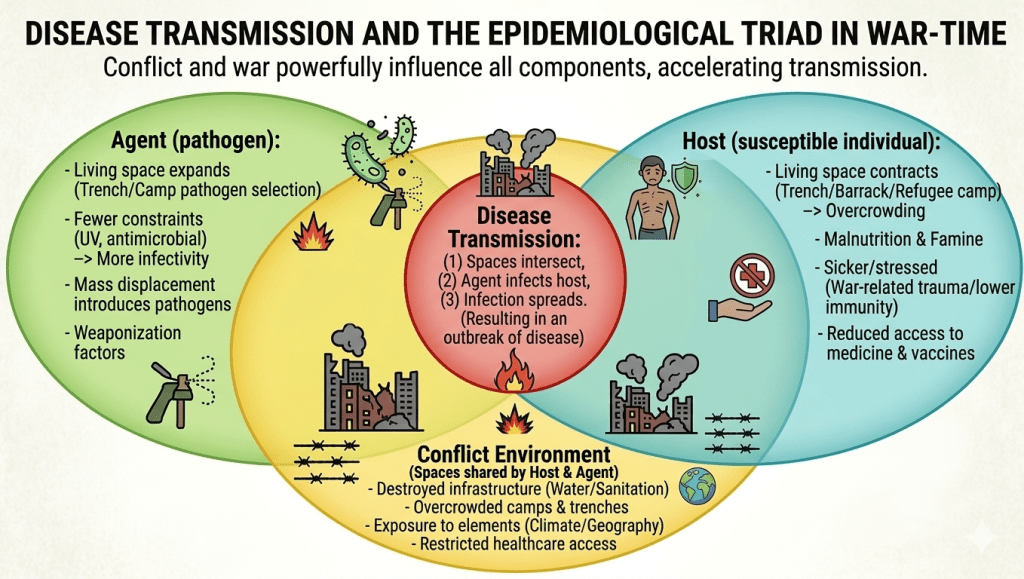
The contagion-conflict conundrum is…
- (1) Local (endemic) pathogens struggle to survive and replicate.
- (2) Conflict increases host availability by stressing host immunity, degrading shelter/sanitation, and concentrating hosts (e.g. people) near pathogens.
- (3) Pathogens infect hosts.
These are familiar problems with different characters. The problems are epidemics and conflicts. The current characters are Ebola Bundibugyo virus, the aforementioned militias, and all of the people/nations supporting them.
Lebensraum: How “More” Leads to War…
If you’ve studied World War II history, you probably know that Hitler justified the start of the Second World War, and the deaths of millions, as a quest for living space (“Lebensraum”). You may also know that he sealed his fate, and the deaths of millions more, when he decided to invade the Soviet Union. You may not know that diseases like typhus helped ensure the defeat of Nazi Germany. It is hard to win a war on multiple fronts, especially when one of those fronts is the fight against infectious disease.

Disease acts as a third front in all conflicts. Typhus, tuberculosis, malaria, and dysentery were hostile to all humans in the second world war. Like Eastern Europe in 1941, Eastern Congo’s militias, public health professionals, and civilians are surrounded by conflict in 2026. And like other infectious diseases, Ebola Bundibugyo spreads to any potential host, regardless of one’s race, nationality, or political affiliations.
Similar to 1939 Germany, 1994 Rwanda was rife with calls for more land and resources. Scholars suggest population density and extractive economics may have contributed to the genocide in Rwanda (Acemoglu & Robinson, 2012; Diamond, 2005). Limited land access, corrupt politics, and prejudiced propaganda helped cause the genocide that killed 800,000 people in 100 days (Boudreaux, 2009; Magnarellav, 2002; Yanagizawa-Drott; 2012).
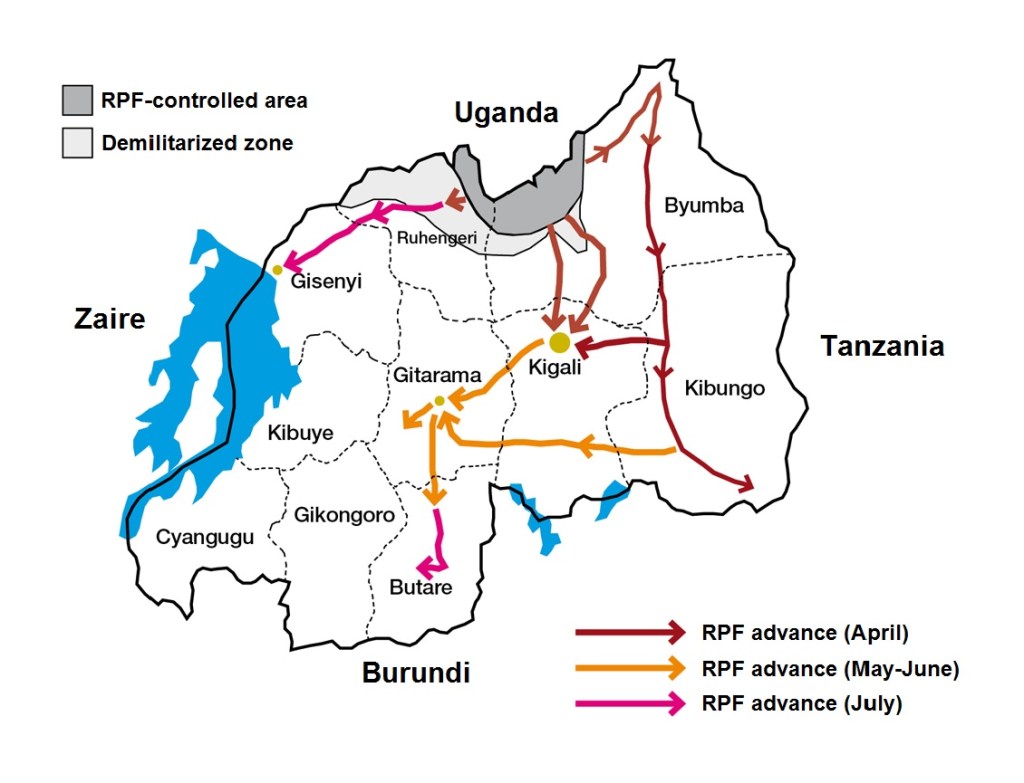
The genocide in Rwanda led to the first and second Congo Wars which led to the latest Congo conflict and Ebolavirus outbreak. You may not have to worry about contracting Ebolavirus if you don’t live or work in central Africa. But you may want to worry about those who are caught between these far away diseases and conflicts. Because if extractive economics, corrupt politics, and racist propaganda reach you, conflict and disease may follow.
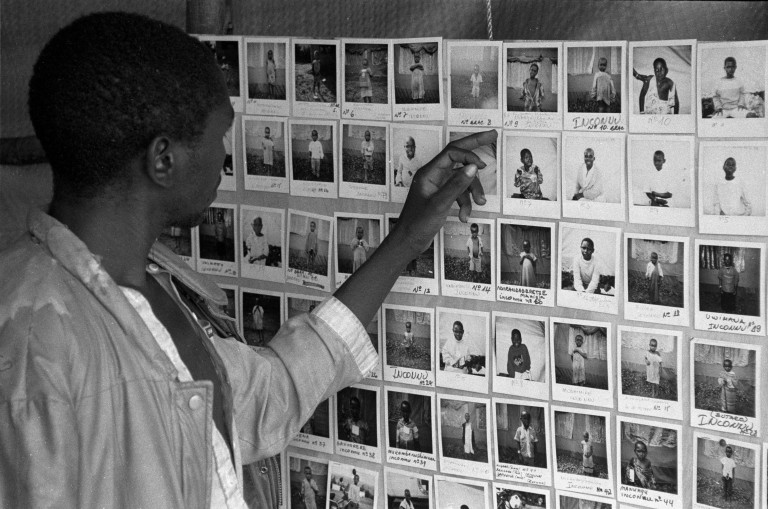
A father is searching for his missing child using ICRC assistance during the 1994 Rwandan Genocide. (British Red Cross, 1994)
The solution to the contagion-conflict conundrum is to break the chains of pathogenicity and violence. A prompt, proactive, and productive international response can neutralize infectious disease outbreaks and the conflicts that stoke them. But such responses may require more public health awareness and political support for the mitigation of pathogenicity and violence.
Note: The Ebola Bundibugyo outbreak is highly fluid. See CDC or WHO for updates.
Sources:
Acemoglu, D., & Robinson, J. A. (2012). Why nations fail: The origins of power, prosperity, and poverty. Crown Publishers.
Action, C. F. P. (2026, February 18). Conflict in the Democratic Republic of Congo. Global Conflict Tracker. https://www.cfr.org/global-conflict-tracker/conflict/violence-democratic-republic-congo
Alsan, M. M., Westerhaus, M., Herce, M., Nakashima, K., & Farmer, P. E. (2011). Poverty, Global Health, and Infectious Disease: Lessons from Haiti and Rwanda. Infectious Disease Clinics of North America, 25(3), 611–622. https://doi.org/10.1016/j.idc.2011.05.004
Artist unknown & Kangura. (1993, December). File:Kangura 12-1993 cover.gif – Wikipedia (H. Ngeze, Ed.). https://en.wikipedia.org/wiki/File:Kangura_12-1993_cover.gif
Boudreaux, K. (2009). Land Conflict and Genocide in Rwanda. The Electronic Journal of Sustainable Development, 1(3). https://dlc.dlib.indiana.edu/dlcrest/api/core/bitstreams/72606d08-009c-4d2e-80b5-b25bc0c2f867/content
British Red Cross. (1994). File:1994 Rwandan Genocide.jpg. commons.wikimedia.org. Retrieved June 9, 2026, from https://upload.wikimedia.org/wikipedia/commons/5/5c/1994_Rwandan_Genocide.jpg
https://www.flickr.com/photos/britishredcross/9082110405
Center for Preventative Action. (2026, February 18). Conflict in the Democratic Republic of Congo. Global Conflict Tracker. https://www.cfr.org/global-conflict-tracker/conflict/violence-democratic-republic-congo
Coghlan, B., Burnet Institute, Ngoy, P., & International Rescue Committee. (2007). Mortality in the Democratic Republic of Congo: an ongoing crisis. In Mortality in the Democratic Republic of Congo: An Ongoing Crisis [Report]. https://www.rescue.org/sites/default/files/document/661/2006-7congomortalitysurvey.pdf
Diamond, J. (2005). Collapse: How societies choose to fail or succeed. Viking. [1, 2]
Ebola – Wikimedia Commons. (n.d.). https://commons.wikimedia.org/wiki/Ebola
Ebola outbreak: current situation. (2026, June 5). Ebola. https://www.cdc.gov/ebola/situation-summary/index.html
Elledge, J. (2024, July 20). Book Club: The viruses that helped win the Battle of Stalingrad. The Newsletter of (Not Quite) Everything. https://jonn.substack.com/p/book-club-the-viruses-that-helped
File:Adolf Hitler’s Own Book Mein Kampf, p. 16 image.tif – Wikimedia Commons. (1939). https://commons.wikimedia.org/wiki/File:Adolf_Hitler%27s_Own_Book_Mein_Kampf,_p._16_image.tif
File:Kivuconflict.png – Wikimedia Commons. (2020, May 7). https://commons.wikimedia.org/wiki/File:Kivuconflict.png
File:Mask Nurse Donna Wood in her safety suit.jpg – Wikimedia Commons. (2014, November 17). https://commons.wikimedia.org/wiki/File:Mask_Nurse_Donna_Wood_in_her_safety_suit.jpg
File:RPF advance Rwandan Genocide 1994.jpg – Wikimedia Commons. (2014, February 9). https://commons.wikimedia.org/wiki/File:RPF_advance_Rwandan_Genocide_1994.jpg
Josephine, K. (2025, May 5). How media was used to amplify 1994 Genocide. The Great Lakes Eye. https://thegreatlakeseye.com/post?s=How–media–was–used–to–amplify–1994–Genocide–_1807
Lawal, S. (2025, February 4). A guide to the decades-long conflict in DR Congo. Al Jazeera. https://www.aljazeera.com/news/2024/2/21/a-guide-to-the-decades-long-conflict-in-dr-congo
Loddenkemper, R., & Murray, J. F. (2018). Tuberculosis and war: lessons learned from World War II. In Progress in Respiratory Research (pp. 214–228). https://doi.org/10.1159/000481490
Magnarellav, P. (2002). Explaining Rwanda’s 1994 Genocide. Human Rights & Human Welfare: Vol. 2: Iss. 1, Article 3. https://doi.org/10.56902/HRHW.2002.2.1.3
Available at: https://digitalcommons.du.edu/hrhw/vol2/iss1/3
Mortality in the Democratic Republic of Congo: An ongoing crisis | The IRC. (n.d.). Mortality in the Democratic Republic of Congo: An Ongoing Crisis. https://www.rescue.org/report/mortality-democratic-republic-congo-ongoing-crisis
Morbidity and Mortality Surveillance in Rwandan Refugees — Burundi and Zaire, 1994. (1996, February 9). https://www.cdc.gov/mmwr/preview/mmwrhtml/00040202.htm
National Center for Emerging and Zoonotic Infectious Diseases & Division of High-Consequence Pathogens and Pathology (DHCPP). (2018). Ebola Virus Disease (EVD). https://www.cdc.gov/vhf/ebola/resources/pdfs/ebola-factsheet-P.pdf
Panzi Foundation. (2026, February 9). Understanding the Genocide in the Congo War | Panzi Foundation. https://panzifoundation.org/war-in-congo/
Roy, Kaushik; Ray, Sougat1. War and Epidemics: A Chronicle of Infectious Diseases. Journal of Marine Medical Society 20(1):p 50-54, Jan–Jun 2018. | DOI: 10.4103/jmms.jmms_34_18
Sawasawa, M. (2026, January). Conflict in DR Congo: What’s happening & how to help: Fighting in eastern DR Congo has rapidly escalated in 2025, displacing hundreds of thousands as humanitarian needs skyrocket. doctorswithoutborders.org. Retrieved June 7, 2026, from https://www.doctorswithoutborders.org/latest/conflict-dr-congo-whats-happening-how-help
World Health Organization: WHO & World Health Organization: WHO. (2025, April 24). Ebola disease. https://www.who.int/news-room/fact-sheets/detail/ebola-disease
Yanagizawa-Drott, D. (2012). Propaganda and Conflict: Theory and evidence from the Rwandan Genocide (CID Working Paper No. 257). Harvard University Center for International Development. Retrieved June 8, 2026, from https://digitalcommons.du.edu/cgi/viewcontent.cgi?params=/context/hrhw/article/1026/&path_info=3___Explaining_Rwanda_s_1994_Genocide.pdf
Sources for Epidemiological Triad Image:
Biselli, R., Nisini, R., Lista, F., Autore, A., Lastilla, M., De Lorenzo, G., Peragallo, M. S., Stroffolini, T., & D’Amelio, R. (2022). A historical review of military medical strategies for fighting infectious diseases: From battlefields to global health. Biomedicines, 10(8), 2050. https://doi.org/10.3390/biomedicines10082050 Cited by: 49
Daw, M. A., El-Bouzedi, A. H., & Ahmed, M. O. (2021). The impact of armed conflict on the prevalence and transmission dynamics of HIV infection in Libya. Frontiers in Public Health. https://doi.org/10.21203/rs.3.rs-920965/v1 Cited by: 34
John, T. J., & Kompithra, R. Z. (2023). Eco-epidemiology triad to explain infectious diseases. Indian Journal of Medical Research, 158(2), 107–112. https://doi.org/10.4103/ijmr.ijmr_3031_21 Cited by: 26
Oliveira, A. R. S., Cohnstaedt, L. W., & Cernicchiaro, N. (2018). Japanese encephalitis virus: Placing disease vectors in the epidemiologic triad. Annals of the Entomological Society of America, 111(6), 295–306. https://doi.org/10.1093/aesa/say025 Cited by: 40
Topluoglu, S., Taylan-Ozkan, A., & Alp, E. (2023). Impact of wars and natural disasters on emerging and re-emerging infectious diseases. Frontiers in Public Health, 11. https://doi.org/10.3389/fpubh.2023.1215929 Cited by: 111
van Seventer, J. M., & Hochberg, N. S. (2017). Principles of infectious diseases: Transmission, diagnosis, prevention, and control. In International Encyclopedia of Public Health (pp. 22–39). Elsevier. https://doi.org/10.1016/b978-0-12-803678-5.00516-6 Cited by: 506
 Protean Therapy


Leave a comment